
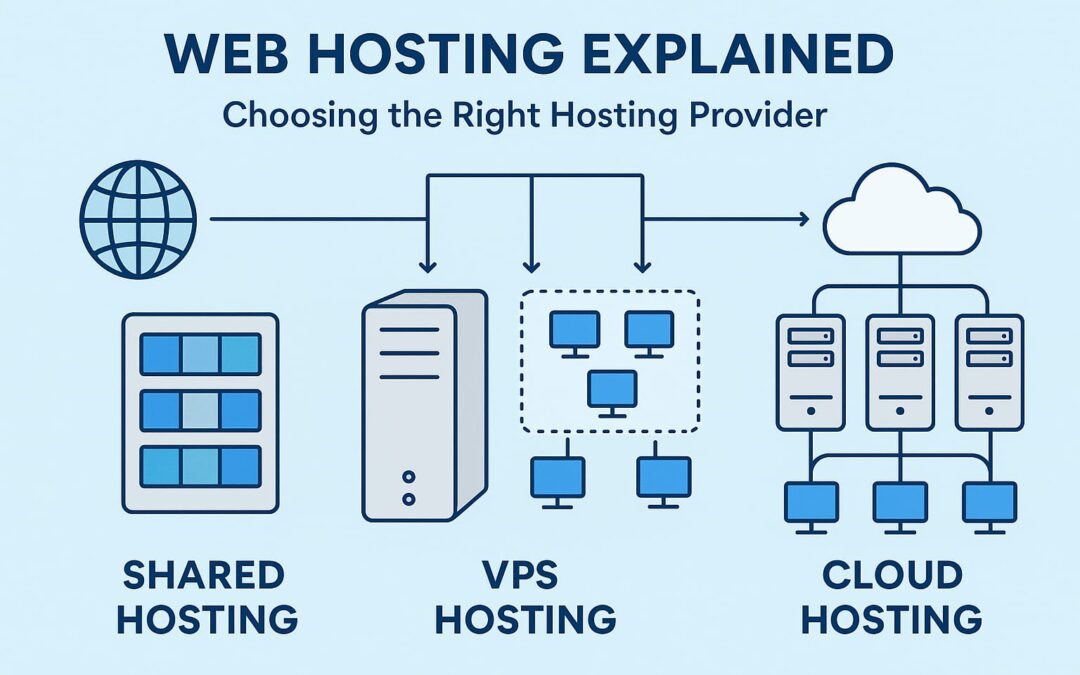
Web Hosting Explained for beginners! Discover what web hosting is, types of hosting, and how to choose the best provider for your business or website.
🧠 Introduction
Web Hosting Explained — it’s a phrase every website owner needs to understand. Whether you’re starting a blog, launching an online store, or building a business site, choosing the right web hosting provider is one of the most important decisions you’ll make.
But what is web hosting really? Why does it matter so much? And how can you choose the right hosting provider for your needs?
This complete guide explains everything you need to know before signing up for any hosting plan.
🌐 Web Hosting Explained: What Is Web Hosting?
At its core, web hosting is a service that allows individuals and businesses to make their websites accessible on the internet. Your website — made up of files, images, scripts, and content — needs to be stored on a server. That server is managed by your hosting provider.
When someone types your domain name into a browser, the hosting server delivers the content of your website to that visitor. Without a host, your website simply cannot be viewed online.
Think of it this way: your domain name is your home address, and web hosting is the house where your website lives.
⚙️ Why Web Hosting Matters
Understanding web hosting explained goes beyond just definitions. Your hosting directly impacts:
- Website speed and load time
- Security and data protection
- Uptime (availability)
- SEO rankings
- User experience
Poor hosting can lead to slow-loading pages, downtime, and lost customers. On the other hand, great hosting ensures your site runs smoothly 24/7.
📊 Types of Web Hosting Explained
Choosing the right hosting type is crucial. Here are the most common hosting options:
1. Shared Hosting
Your website shares server space with other websites. It’s affordable and ideal for beginners or small websites with low traffic. But since resources are shared, speed and performance may be affected during traffic spikes.
2. VPS Hosting (Virtual Private Server)
A virtual slice of a physical server, offering better performance and isolation. It’s more powerful than shared hosting and perfect for growing websites that need flexibility.
3. Dedicated Hosting
You rent an entire server exclusively for your website. It offers high performance and complete control, ideal for large eCommerce sites or web apps — but it comes at a premium price.
4. Cloud Hosting
Websites are hosted on a network of virtual servers, offering high availability and scalability. It’s reliable, secure, and ideal for websites with fluctuating traffic or global audiences.
5. Managed Hosting
A fully managed solution where your provider handles updates, backups, and security. It’s perfect for non-technical users or anyone running WordPress sites.
🔗 External Link Suggestion: What is Web Hosting? – Hostinger
🧩 How to Choose the Right Web Hosting Provider
Now that you understand web hosting explained, here’s how to choose the right provider:
✅ 1. Performance & Speed
Choose a host with fast SSD storage, caching features, and optimized server locations close to your users.
✅ 2. Uptime Guarantee
Look for hosts offering 99.9% uptime or better. Frequent downtime harms user trust and SEO rankings.
✅ 3. Customer Support
24/7 live chat or phone support is critical, especially if you’re not tech-savvy. Test their response time before purchasing.
✅ 4. Security Features
Security is non-negotiable. Ensure your host offers free SSL, firewall protection, malware scans, and automatic backups.
✅ 5. Pricing Transparency
Avoid providers with hidden fees or high renewal rates. Read the fine print. Low introductory pricing can be misleading.
✅ 6. Scalability
Start small, but make sure your hosting can grow with your traffic. Easy upgrades to VPS or cloud plans are important.
🛠️ Must-Have Features in a Hosting Plan
While pricing is important, look beyond that. A reliable host should offer:
- ✔️ Free SSL Certificates
- ✔️ Email Hosting with your domain
- ✔️ cPanel or intuitive dashboard
- ✔️ One-click app installers (for WordPress, Magento, etc.)
- ✔️ Daily or weekly backups
- ✔️ Free website migration if switching hosts
- ✔️ Integrated CDN for faster global performance
- ✔️ DDoS protection and basic firewall
🔗 Internal Link Suggestions (link these to related service pages on your website):
/web-hosting-plans/cloud-vs-shared-hosting/wordpress-hosting-benefits
❌ Common Hosting Mistakes to Avoid
Many beginners fall into traps when choosing a hosting provider. Here’s what to watch out for:
- ❌ Choosing the cheapest plan without checking performance or support
- ❌ Ignoring uptime guarantees or speed benchmarks
- ❌ Not reviewing customer feedback or online reviews
- ❌ Failing to check backup frequency or security protocols
- ❌ Signing long-term contracts without a refund guarantee
Understanding web hosting explained in detail helps you avoid these pitfalls and make smarter decisions.
📈 Best Hosting Providers to Consider
Though this will depend on your location and needs, some globally trusted hosting brands include:
- SiteGround – Great support, reliable uptime
- Bluehost – Official WordPress partner
- Hostinger – Affordable with powerful features
- A2 Hosting – Known for speed
- Kinsta – Premium managed WordPress hosting
✅ Web Hosting FAQs
❓ Can I host a website for free?
Yes, but free hosting comes with limitations — ads, poor support, and limited resources. It’s not ideal for professional use.
❓ What is bandwidth in hosting?
Bandwidth refers to the amount of data transferred from your site to visitors. More bandwidth = smoother performance for high-traffic sites.
❓ Can I upgrade my hosting later?
Absolutely. Most reputable providers allow seamless upgrades from shared to VPS or cloud hosting as your traffic grows.
🔚 Conclusion: Make a Smart Hosting Decision
Hopefully, with web hosting explained in plain terms, you now feel confident to choose a provider that fits your needs.
To recap, always prioritize:
- ⚡ Performance
- 🔐 Security
- 💬 Support
- 📊 Scalability
The right host won’t just “store” your website — it will empower it to grow and perform well.