
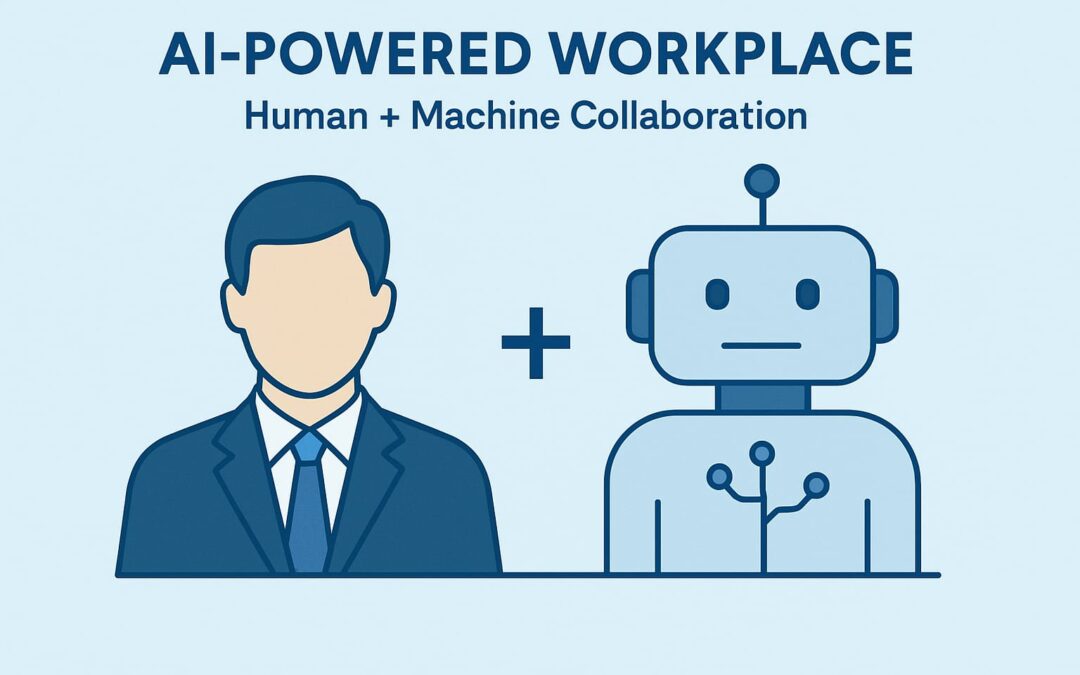
Discover how AI and automation are transforming the future of work. Learn which jobs are evolving, what skills are in demand, and how businesses can adapt.
1. Introduction: The New Reality of Work
From self-driving cars to chatbots that handle customer queries, artificial intelligence (AI) and automation are everywhere. But beyond tech headlines, the real transformation is happening in the workplace.
How AI and automation are changing the future of work is no longer a theory—it’s a present-day shift that’s influencing how we work, what roles exist, and how companies operate.
2. What Are AI and Automation?
Before diving into the transformation, it’s important to understand the difference:
- Artificial Intelligence (AI): Refers to computer systems designed to mimic human intelligence, such as learning, problem-solving, and decision-making.
- Automation: Involves using technology to perform tasks with minimal human involvement—especially repetitive and rule-based tasks.
Combined, AI and automation are driving a major evolution in global industries.
3. How AI and Automation Are Changing the Future of Work
Let’s break down seven core ways this transformation is happening:
1. Job Redefinition
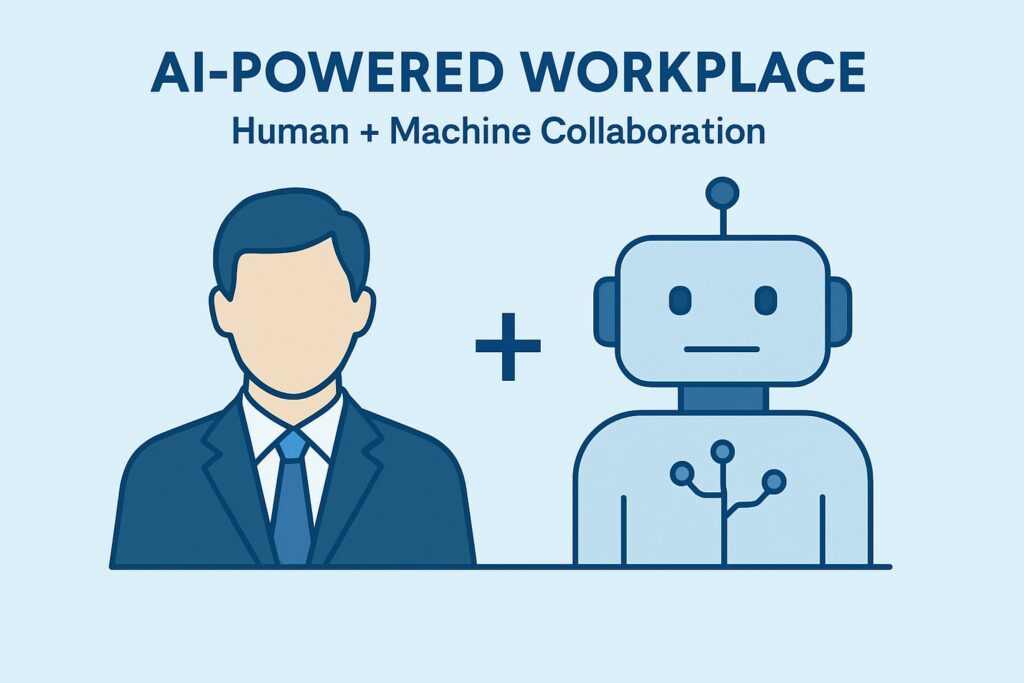
Jobs aren’t disappearing—they’re evolving. AI is taking over repetitive or data-heavy tasks (e.g., invoice processing or data entry), which allows employees to focus on strategic, creative, and human-centric work. For example, in customer service, chatbots handle FAQs while human agents solve complex problems.
2. Empowering Remote Collaboration
AI tools now help distributed teams collaborate better. From smart scheduling assistants to automated note-takers in video calls, the way we communicate remotely has become faster and more intelligent.
3. Smarter Decision Making
Businesses rely on AI for real-time data analysis. AI tools help interpret trends, forecast demand, and even suggest business strategies. Leaders can now make data-backed decisions within minutes.
4. Personalized Experiences
Marketing, education, eCommerce—nearly every industry uses AI to personalize user experiences. Whether it’s Netflix recommendations or email campaigns, AI enables personalization at scale, which improves customer satisfaction and engagement.
5. New Career Paths
Entirely new roles are emerging: AI ethicists, automation designers, data scientists, prompt engineers, and machine learning ops (MLOps) experts. This means AI is creating jobs, not just taking them away.
6. Skill Shift
Technical skills (like Python or machine learning) are in high demand. But soft skills like emotional intelligence, critical thinking, and creativity are becoming equally valuable as machines take over routine work.
7. Organizational Restructuring
Many companies are rethinking their structures—creating AI-first departments, automating HR tasks, or optimizing logistics with machine learning. This means flatter hierarchies and more agile decision-making.
4. Key Benefits of Embracing AI and Automation
- 🔹 Efficiency: Tasks are done faster, with fewer errors.
- 🔹 Cost Savings: Businesses save on labor and operation costs.
- 🔹 Productivity: Employees can focus on high-value work.
- 🔹 Innovation: Automation gives teams room to innovate and experiment.
- 🔹 Competitive Advantage: Businesses using AI often outperform those who don’t.
5. Challenges and Ethical Considerations
Even with its benefits, AI and automation bring some risks:
- ❗ Job Displacement: Especially in sectors like manufacturing and admin.
- ❗ Bias in AI Systems: AI learns from data, which can contain societal biases.
- ❗ Privacy and Data Security: Mishandled data can lead to breaches.
- ❗ Loss of Human Touch: Over-automation in healthcare or HR can reduce empathy.
- ❗ Transparency Issues: Decisions made by AI aren’t always explainable.
6. Skills Needed to Stay Competitive
To stay ahead in an AI-powered world, employees and students need to upskill:
- 💡 Digital Literacy
- 💡 Analytical Thinking
- 💡 Basic Coding/AI Understanding
- 💡 Adaptability
- 💡 Collaboration and Emotional Intelligence
- 💡 Creative Problem Solving
Platforms like Coursera, Google Career Certificates, and LinkedIn Learning offer excellent AI and automation-related courses.
7. How Businesses Can Prepare
Organizations that want to future-proof their workforce should:
- ✅ Invest in Training: Offer employees upskilling and reskilling opportunities.
- ✅ Audit Processes: Identify areas that can be automated without hurting user experience.
- ✅ Embrace Ethical AI: Use tools that prioritize transparency and fairness.
- ✅ Hire for Hybrid Skills: Look for candidates who balance tech and soft skills.
- ✅ Redesign Workflows: Introduce automation as support, not a replacement.
8. Final Thoughts
How AI and automation are changing the future of work is a reality we must adapt to—not fear. While some tasks will be eliminated, more opportunities will emerge for those ready to learn and lead with technology.
AI is not replacing humans—it’s redefining how humans work. Businesses, educators, and professionals who embrace this change will lead the future